Abitibi-Témiscamingue Travel Guide: A New National Park, Waterfalls & a Glass Dome
This post was created in partnership with Tourisme Abitibi-Témiscamingue. As always, everything here is what we actually experienced and would tell a friend.
The part of Quebec almost nobody from Ontario drives to
Ask most Ontarians to name a Quebec road trip and you'll hear the same handful of answers: Quebec City, the Laurentians, maybe Mont-Tremblant if they're feeling ambitious. Almost nobody says Abitibi-Témiscamingue, and until this trip, I couldn't have pointed to it on a map either.
It sits in the far northwest corner of the province, tucked right up against the Ontario border, closer to North Bay than it is to Montreal. That location is exactly why it stays so quiet. It's a genuine road trip, not a quick weekend hop, and that alone is enough to keep it off most people's list. But it's also exactly what makes it feel untouched in a way very few places left in Ontario's driving radius still do.
We spent three days up there and it quietly became one of our favourite trips in the country. A brand new national park. Waterfalls with nobody else on the trail. Six thousand years of history on a single stretch of shoreline. A see-through dome on a lake that I am still thinking about. Here's everything we found, and why it's worth the drive.
How far is Abitibi-Témiscamingue from Ontario?
Closer than most people assume. We drove up from the Toronto area in about four and a half hours, and the region actually borders Ontario along Témiscaming — meaning for a lot of Ontario travellers, this is a shorter drive than getting to some parts of cottage country during summer traffic.
You will want your own car. There is almost no public transit once you're up there, and that's part of the appeal — the empty highway between stops is half the experience. Stop to fill the cooler before you go in; services thin out fast once you're past the main towns.
Parc national d'Opémican: one of Quebec's newest national parks
Our first stop was Parc national d'Opémican, which only opened in 2019 — young enough that even a lot of Quebecers haven't been yet. We stayed in a ready-to-camp in the Pointe-Opémican sector: a canvas cabin with real beds, a small kitchen, and a covered porch that looks straight into the pines, a sandy beach on Lac Témiscamingue a short walk from the door.
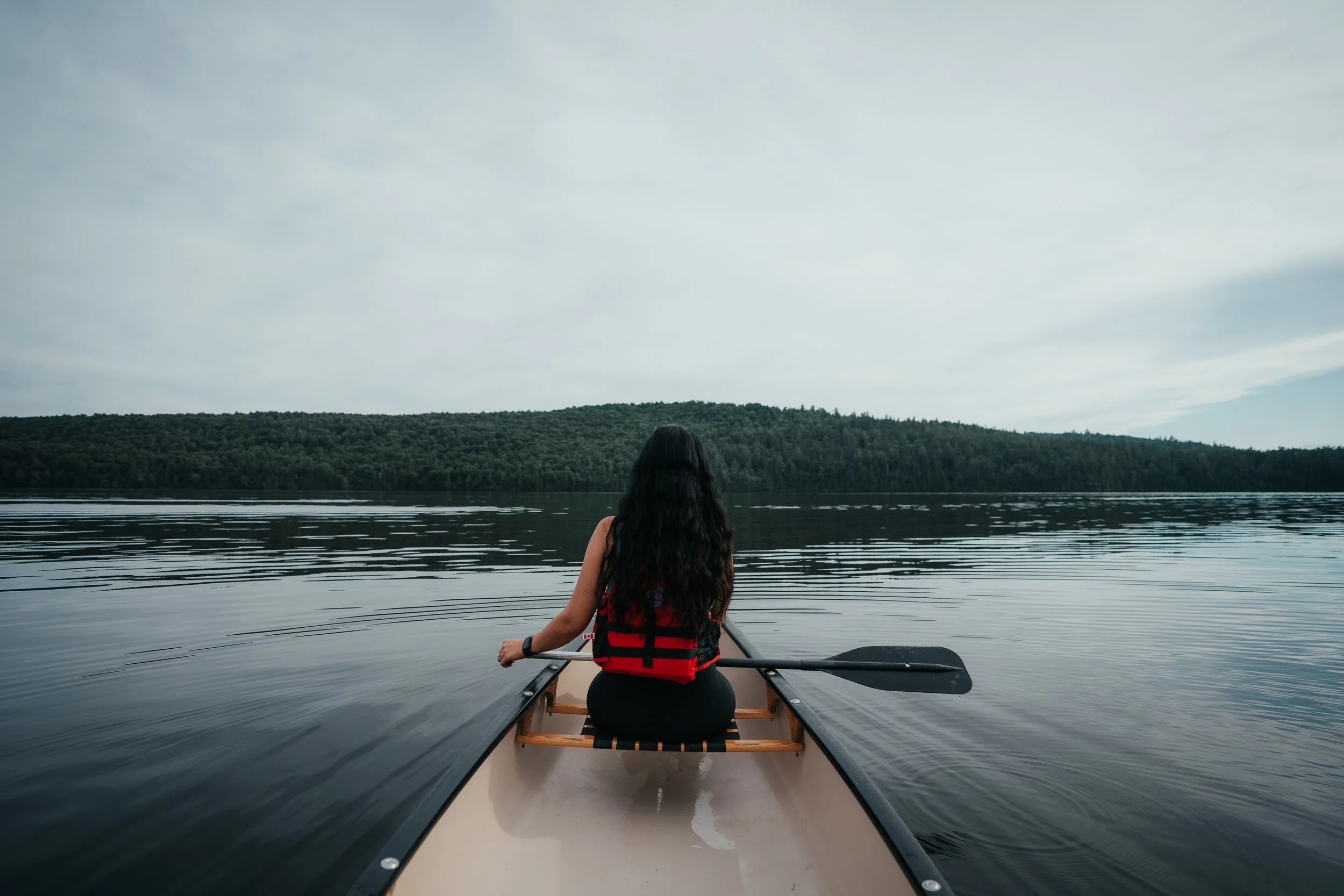
The park's real showpiece is the Rivière-Kipawa sector, about 45 minutes north through the Laniel welcome post. Three short trails live there, and all three are worth doing if you have the time. La Grande-Chute is a quick 1.2 km walk to a lookout over a fifteen-metre waterfall. Inukshuk climbs to clifftop views with a stone staircase down to the mouth of the Kipawa river. And Paroi-aux-Faucons — the standout of the three — is a short climb to a seventy-metre rock wall with a panorama that genuinely stopped us mid-sentence.
There's no drinking water in the Kipawa sector, so pack it in, and pack lunch too. Eating on the cliffs after Paroi-aux-Faucons is honestly unbeatable.
Six thousand years of history, then a dome on a lake
The most grounding stop of the trip was Obadjiwan-Fort-Témiscamingue, a former fur-trading post from 1720 sitting on ground Indigenous peoples have used for more than six thousand years. It's co-managed with the Timiskaming First Nation, and between the outdoor character stations and the exhibition, it's the kind of site you feel more than you tour.
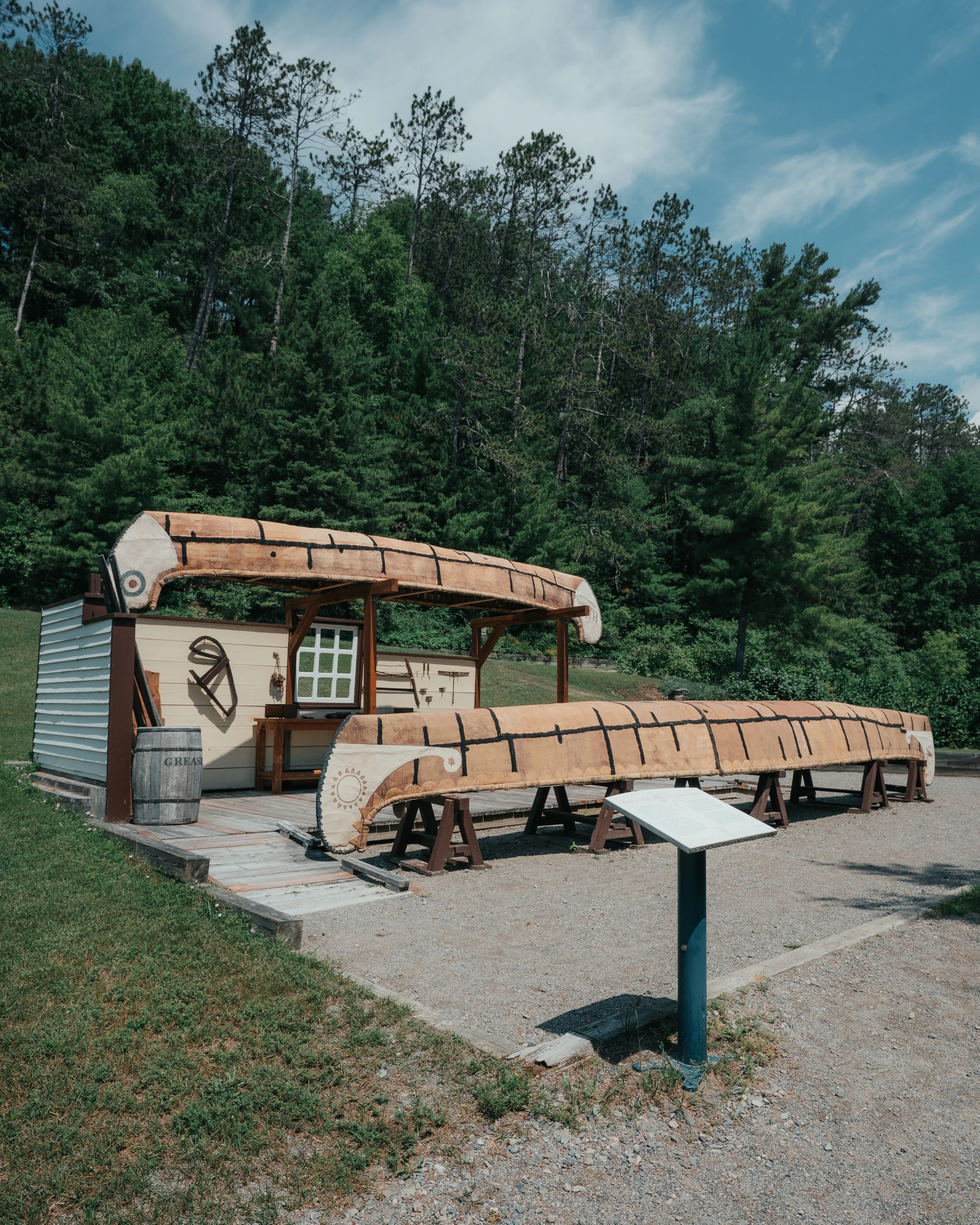
Traditional birchbark canoes on display at Obadjiwan-Fort-Témiscamingue, Duhamel-Ouest, Québec.
Then, in complete contrast, we ended the day at Le Céleste — a clear, domed shell of a cabin right on the shore of Lac Cameron. Not glass, but close enough that you fall asleep looking straight up at the stars. There's a full kitchen, a real bathroom, a queen bed on the mezzanine, kayaks and paddleboards off the beach, and a wood-fired pizza night on site that was, honestly, really good pizza. If a dome stay is on your list at all, this is the one to book — and book it early, because these fill fast in summer.
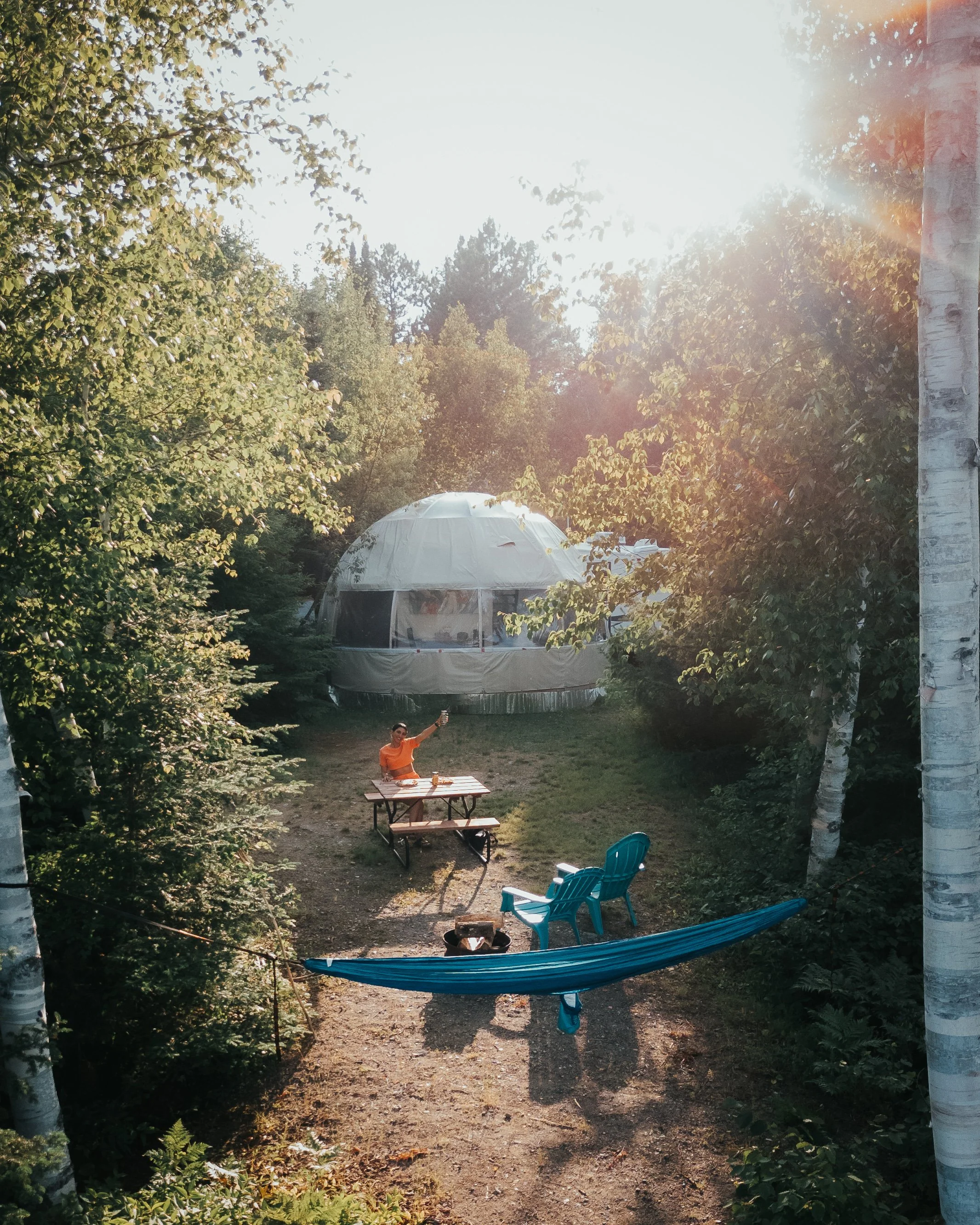
Le Céleste at Le P'tit Paradis — a see-through dome on Lac Cameron, near Duhamel-Ouest, Québec
Rouyn-Noranda: a mining town turned open-air art gallery
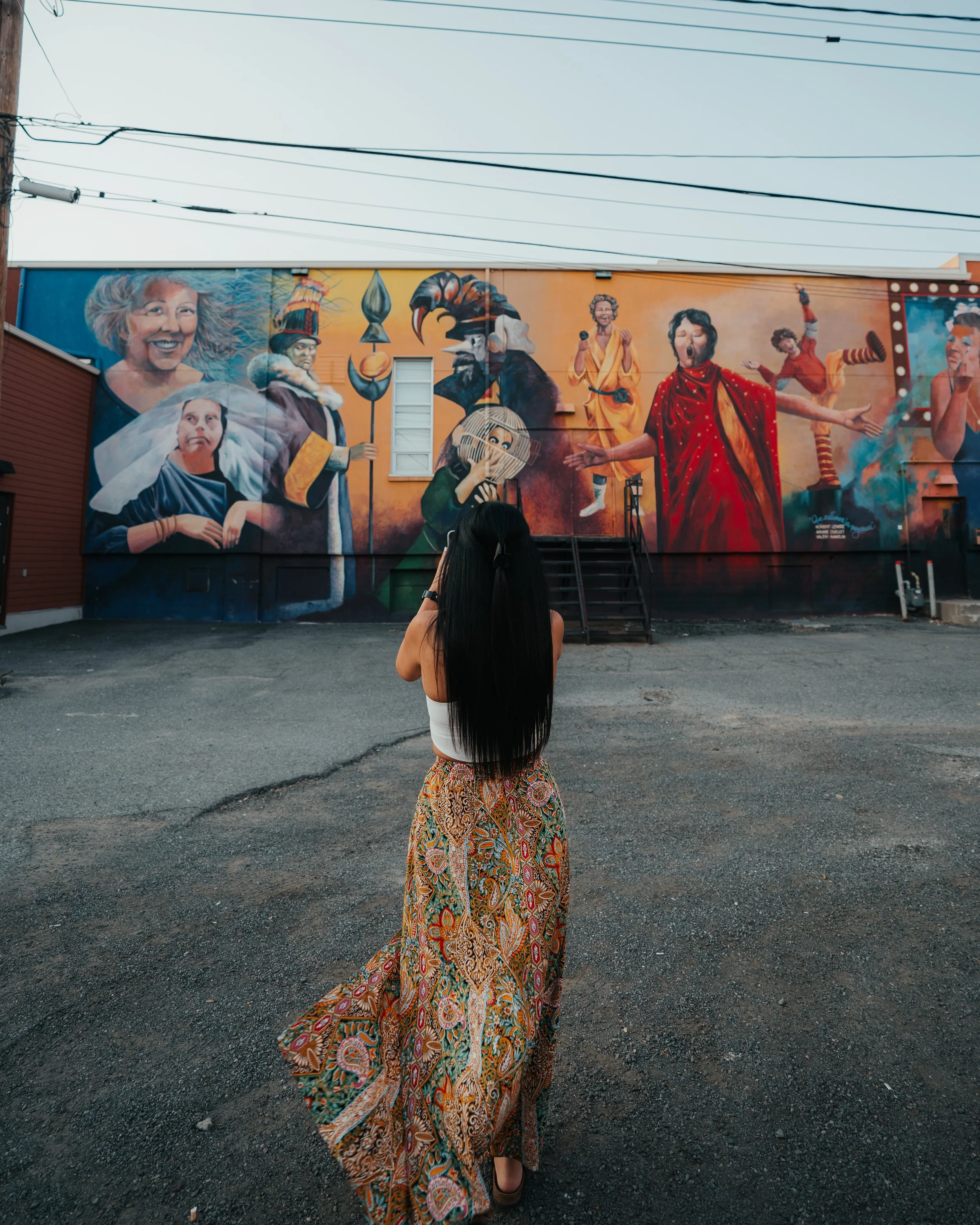
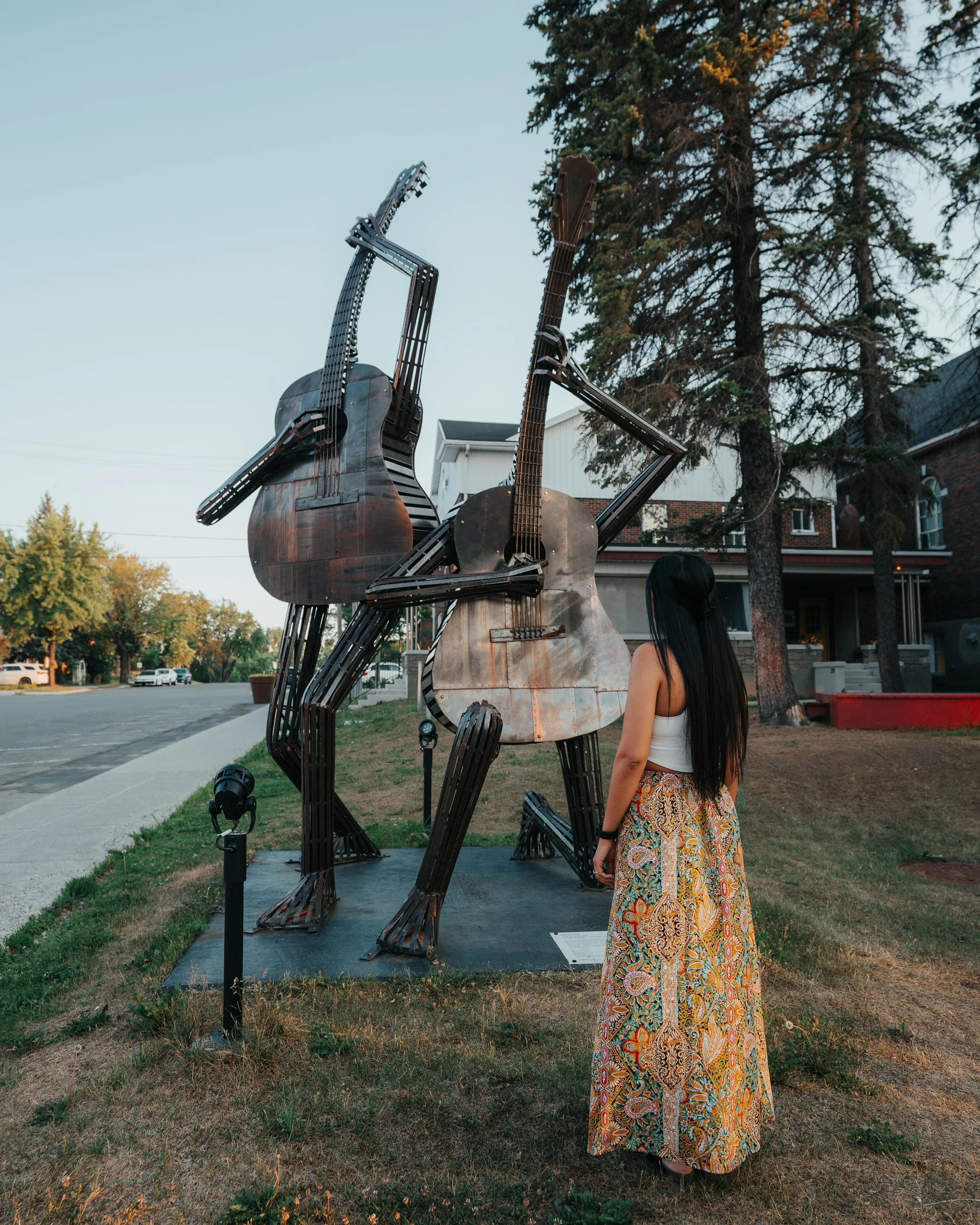
We closed the trip in Rouyn-Noranda, about an hour and fifteen minutes from the dome. It's a small city, but it punches well above its size — downtown has quietly become an open-air gallery, with nineteen public artworks scattered through the streets since 2015. The free Balado Découverte app maps the whole self-guided route, about five kilometres on foot.
If you've got extra time, the Kekeko Hills sit about 12 km outside town, with fifteen trails and over forty kilometres of them — climb to the Nid de l'épervier observation tower for a full view over the city if you can fit it in. We ended our last night with dinner at Horizon Thaï, the highest-rated restaurant in town, before the long drive home.

Is Abitibi-Témiscamingue worth visiting?
If you want a trip that looks exactly like everyone else's Quebec highlight reel, this isn't it — and that's the point. What you get instead is a brand new national park without the crowds, waterfalls you'll likely have to yourself, a genuinely moving piece of shared history, and a city that surprises you. So much of it is free too — the hikes, the lookouts, the lake access — with only a small daily park fee standing between you and most of what makes the region special.
Quick tips before you go
- Book stays early — the dome and the ready-to-camps sell out fast in summer
- Pack layers and bug spray — northern evenings turn cool, and the bugs are real through the summer
- Leave a buffer day — the best moments were the unplanned ones
- Go in shoulder season (late June or September) for the same big views with fewer people
- A little French goes a long way — a warm bonjour and merci are always appreciated
Want the full day-by-day itinerary?
We mapped out everything above into a complete three-day, stop-by-stop guide — where we stayed each night, every trail with distances, and the exact order we did it all in, so you can just follow along.
See you up north,
Tina · @travelwithtina 🇨🇦